


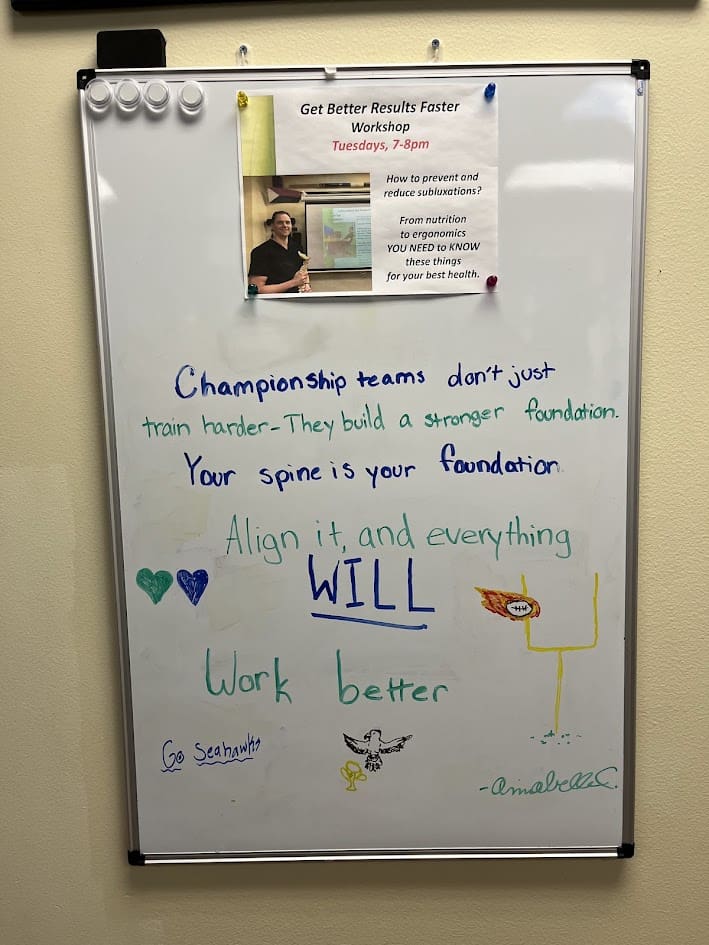
Championship teams don’t just train harder. They build a stronger foundation. Your spine is your foundation. Align it and everything will work better. Go Seahawks!
The Seattle Seahawks built a championship season not by chance, but by daily commitment “My teammates and my coaches believed in me … because of our coaching staff working their butts off every single day,” said Seahawks quarterback Sam Darnold as he reflected after winning Super Bowl LX. Posture improvement works the same way: consistent, structural effort over time that builds lasting results.
Every winter feels a little bit the same. The calendar flips. The planner is clean. There’s that quiet thought: This is the year I finally take better care of myself. Most resolutions revolve around eating better or exercising more. And those are worthy goals. By the time the Super Bowl comes around, how are those goals going?
Here’s one health upgrade not talked about nearly enough — even though it quietly affects everything else. Posture. Not the “sit up straight” kind your mom used to remind you about. The structural, long-term kind that determines how your spine actually functions.
If you want 2026 to feel different with less tension, fewer flare-ups, more energy, and more stability, then posture improvement might be one of the highest-impact changes you can make. Just as the Seattle Seahawks brought home the Super Bowl LX championship in 2026, showing how peak performance comes from strength, structure, and consistency, your spine’s structure plays a similar role in how your body handles stress every day. The Seahawks didn’t rely on effort alone. They built a system that performs under pressure. That’s exactly what posture improvement is about: building structural resilience, not just good intentions.
Why Posture Is More Than a Cosmetic Goal
Posture isn’t cosmetic. It’s mechanical. The position of your spine determines how discs absorb pressure, how joints wear over time, how nerves communicate, and how muscles balance or compensate. When posture gradually shifts forward — from years of desk work, driving, phones, sports, or old injuries — the body adapts. That adaptation doesn’t usually show up as “bad posture.” It shows up as patterns like:
- Forward head posture that contributes to chronic neck tension.
- Thoracic hyperkyphosis that increases mid-back strain.
- A disc bulge made more unstable by postural collapse.
- Whiplash that never fully resolved because the normal curve wasn’t restored.
These are posture-driven diagnoses. They develop slowly and often quietly. The body whispers first — tension headaches, recurring low back tightness, shoulder pain that won’t fully resolve, fatigue by the end of the day. Most people treat these as isolated symptoms. Few realize the curve itself may be the common denominator.
And that’s why posture makes such a powerful health goal. It addresses structure instead of chasing symptoms.
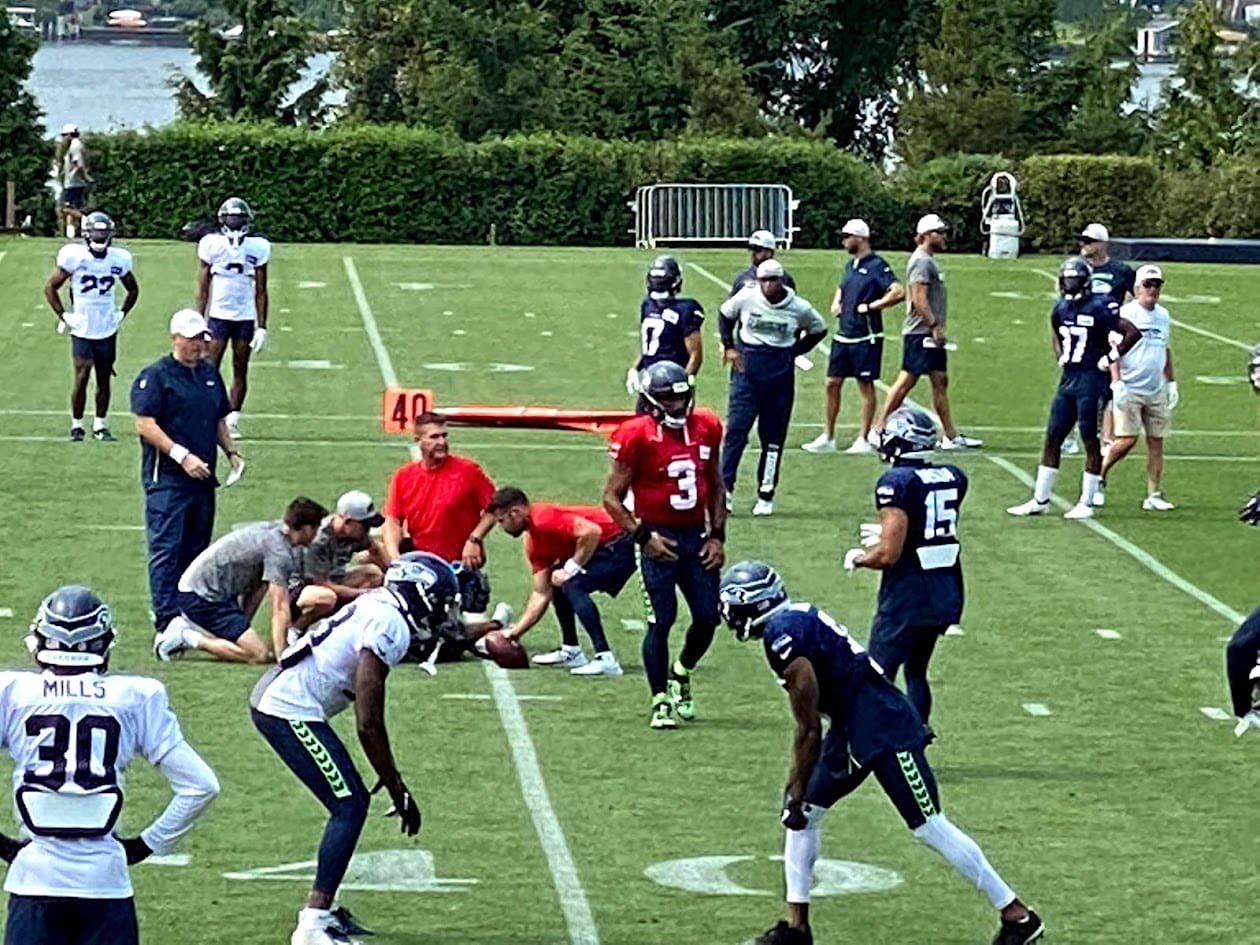
Just like the Seahawks us Spring Training to start off the year with strength, your spine needs a good foundation as well. Are you ready to win in 2026?
The Problem With Most “Fix My Posture” Resolutions
In January, motivation is high. You remind yourself to sit up straighter. You stretch more. You might even buy a new ergonomic chair. However, structural posture problems don’t relapse because you lack effort. They relapse because the curve never changed.
If there is a measurable structural distortion, such as forward head translation, loss of cervical curve, or exaggerated thoracic rounding, then simply trying harder won’t correct it. You can’t muscle your way into structural alignment if the spine itself has adapted into a new position.
That’s why someone can feel better for a few weeks and then the tension, headaches, or disc irritation return. This isn’t generic neck pain. It’s structural. Structural issues respond to consistent, measurable inputs over time and not short bursts of motivation.
Small Daily Changes That Actually Support Posture Improvement
The good news is that posture improvement doesn’t require a two-hour morning routine or a dramatic lifestyle overhaul.
It starts with a few intentional habits repeated consistently.
At our clinic, Dr. Cummins encourages three simple daily practices that support structural strength over time.
- First, daily spinal hygiene exercises. These aren’t random stretches. They’re targeted movements designed to reinforce healthy curves, improve mobility where it’s restricted, and activate the muscles that support proper alignment. Just a few focused minutes each day can help prevent the slow drift back into forward head posture or thoracic rounding. Think of it as brushing your teeth. The small daily maintenance for your spine that protects long-term health. Watch the video now!
- Second, set up your workstation for strength, not strain. If your screen is below eye level, your head naturally shifts forward. Over months and years, that creates the pattern often referred to as tech neck — a modern posture distortion affecting both teens and adults. When your monitor is at eye level, your shoulders relaxed, and your hips supported, you’re no longer fighting gravity all day. You’re reinforcing strength instead of collapse. Read more tips and tricks for office posture!
- Third, give your body the raw materials it needs to repair and rebuild. Structural change isn’t just mechanical, it’s biological. Foundational nutrients like fish oil, vitamin D, and collagen provide building blocks that support healthy tissue repair and reduce inflammation. When the body has what it needs at the cellular level, it can respond more efficiently to correction and reinforcement.
These habits are not extreme, but together they create an environment where structural improvement can actually hold. Here’s the important distinction: self-care supports posture. It doesn’t necessarily correct structural distortion on its own, but when combined with a clear structural plan, these daily inputs make long-term change far more sustainable.
That’s how you build a strong 2026. Not through motivation alone, but through repeatable habits that support the structure you’re working to improve.
If You Want a Championship Posture Team
Self-care habits matter and are often what make for a personal win. If your posture keeps relapsing despite doing the right things, it may be a sign that self-care is supporting your spine and not correcting its structure. That’s where having the right healthcare teammate makes a difference. The Seattle Seahawks didn’t win a championship because players trained hard alone. They had coaches analyzing, adjusting, and guiding the process. Effort mattered, but so did expert direction.
Lasting posture improvement begins with understanding your specific structure. At Cummins Chiropractic & Wellness, care starts with a detailed exam and history. Dr. Cummins often describes this as detective work — evaluating posture measurements, movement patterns, and, when appropriate, imaging to understand what makes each spine unique.
An X-ray may reveal forward head posture, which can drive chronic strain. It may show thoracic hyperkyphosis, which contributes to degeneration. It may explain why a disc bulge keeps relapsing — because posture collapse continues to overload the same area. The curve tells the story. From there, our Foundations of Posture Protocol moves from stabilization to structural correction, so improvements last instead of fading once symptoms calm down.
If you’ve been putting in the effort but not seeing lasting structural change, it may be time to add a true healthcare teammate to your plan because strong results, like championship seasons, are built with the right team.
If you’d like to explore how this works in more detail, learn more about the Foundations of Posture Protocol now. Explore general chiropractic care options, too.
You Don’t Need an Extreme Reset for Easy Posture Improvement
Just as the Seattle Seahawks captured the Super Bowl LX title through steady commitment and preparation, head coach Mike Macdonald said after the game, “We never wavered… And now we’re world champions.” And quarterback Sam Darnold added how proud he was of every unit on the team.
The lesson? Consistent, structural effort and not occasional hard days will build lasting results. That’s exactly how true posture improvement works. You don’t need to become someone new in 2026. You just need to support the body you already have a little more intentionally.
If posture has been quietly contributing to recurring tension, stiffness, or flare-ups, this might be the year to address it, not with a dramatic overhaul, but with a clear plan, because posture improvement isn’t about standing straighter for a week. It’s about building a spine that holds up for decades, and that’s a resolution worth keeping. Schedule an appointment online or call (425)590-9158 to get started today!